
As the bouncing steel frame of my truck rattled down the highway, the cardboard box of unopened beer bottles clinked in my backseat. Every corner seemed to melt away as every turn brought me closer to my destination. I was on my way to visit my best friends for the first time in over three months. Quarantine had kept us apart, but I had felt a growing distance between us long before that had even begun.
Soon enough, laughter echoed down the street as we four sat out in front of a house that we had all lived in together at one point or another. A cool breeze wafted overhead, pushing clouds into the pink horizon, cast by the setting sun in the western sky. We couldn’t help but smile and talk excitedly about our dreams for the future. An aspiring actor, a thriving veterinary technician, and a future biomedical engineer stood across from me, sharing a laugh and nursing our spiritual wounds. It felt like old times, only the lines in our faces had grown deeper and the people that we once were was fading into the past. New beginnings and possibilities ever-present, I smiled and hoped to remember this moment for as long as I live.
***
Sometimes I worry that I’ve forgotten how to make friends and forge bonds. It’s not an easy thing to admit and it honestly feels embarrassing to even think that way. When I try to remember what it was like being younger, it seems like it was almost effortless to do so back then. Whenever a new family would move into the rental house down the street, I would simply fill a cup with some juice (guava was the least popular, I discovered), then walk down there and offer it to the kid that lived there. Families were always moving in and out of that place, and I would always make my same introduction. It was my way of saying “welcome to my world”. Surprisingly, for some reason, it always worked. Actually, when I really think about it, people just do that with liquor now. For other adults, at bars, obviously… yikes. Moving on.
People make friends in different ways and at different rates. Some make friends wherever they go and have many friendly acquaintances, with only a few close relationships. Others might be more selective and keep only a few close friends, seeking to keep those deeply invested relationships to the bloody end. The real challenge is keeping those friends as we age.
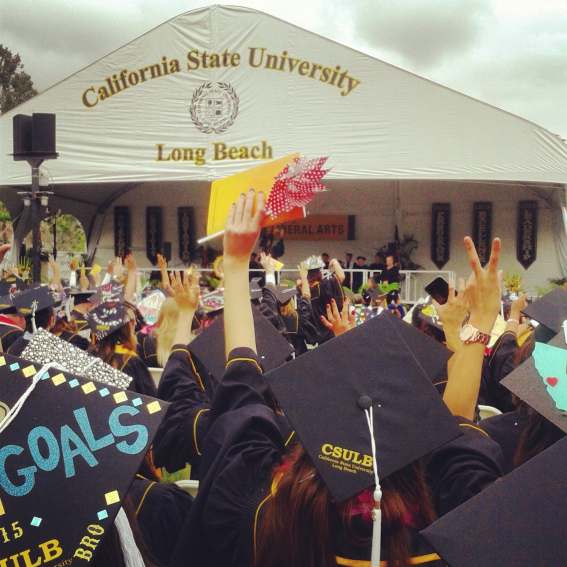
According to the Encyclopedia of Human Relationships and the 2014 American Time Use Survey, many young adults spend 10 to 25 hours a week with friends, with ages 20 to 24 spending the most time per day socializing on average out of any age group. However, as young adults complete the early ground-laying period by graduating, settling down, or following pursuits unburdened by the weight of childhood, these interactions can become few and far between. They become more of a discussion of hanging out, rather than a manifested reality. Perhaps, Dear Reader, this has happened to you already.
This fear is what causes me to cling to old friends, rather than encouraging myself to make new ones. This of course, is a perspective-based trait. I literally watched That 70’s Show in high school to teach myself some social cues after breaking a social taboo at school. Perhaps that explains my awkward nature. What it does not explain is what has changed between that point in time and now.
In our highly mobile and technology-based society, it seems like it should be a blessing to experience an increasingly accessible social network through media apps and electronic communication. However, it is too easily dismissed that it is damaging to the social fabric of our lives. If a friendship is solely dependent on your Facebook account and not on shared experiences, the relationship may be unlikely to maintain a strong bond. Social media may help with maintenance where you would otherwise be unable to meet on a frequent and regular basis. For example, during the Covid-19 period. However, it may also help to keep shallow friendships afloat, when they should probably have been let go of a long time ago.
The expectations for friendship, moving out of young adulthood, is often in conflict with the reality of our lives. As you age, time is poured into other aspects of life, like a job or family. Albeit, not everyone has kids, but priorities change nonetheless. We fill our time as best as we can, drop by drop into the bucket of our existence. The largest drop-off for friendship seems to be when friends get married. It is a bit ironic, considering how you are invited to celebrate with friends from both sides of the couple. It has an unseen bitter-sweetness to it.
The bitter truth is that we are not obliged to friends like we are to romantic partners and family. Part of friendship is an unstated agreement that we are given freedom to be independent of each other and to come and go as we please. Perhaps the difficulty that some people face with this is in how friendship is a key aspect in the development and exploration of our own identities. There can be an inconsistency and dependency developed through this tense truth as people develop at different rates.
I’m sorry if this feels bleak, Dear Reader. I promise that I will get to my final points soon. What I’m getting at now is that we should admit that there must be a level of acceptance that friendships may fall apart, similar to a marriage or a career. With every friendship we accept this possibility in the effort to encourage ourselves to fully live every day without becoming overburdened and losing ourselves in each other. We live with the possibility that the good parts are limited, making them all the more precious.
“Socioemotional selective theory” suggests that as people age they become increasingly selective with whom they invest their resources in, including emotional energy and time. As a result, we reduce emotional risk and increase positive emotional experiences for more rewarding relationships. When people perceive the open-ended nature of the future, focus tends to orient itself toward life development and the pursuit of knowledge-related goals.
When we were children, a ‘friend’ was someone that we would spend time with because they were fun to play with. In adolescence, our tastes and perceptions are heavily influenced by those that we associate ourselves with. Think of all the bottom drawers stuffed with long forgotten keepsakes, lost overtime. How quickly something could become uncool after a single comment.
Young adulthood, however seemingly grim, is a bit of an idyllic period for forming friendships. It is a time of growth and self-discovery. College, clubs, dating, and much more are all opportunities to work on your sense of self. It is a time to take up new interest, to explore new concepts and skills, and a chapter where you are encouraged to be out in the world more. However, it should not stop there. Continue to seek out the uncomfortable purpose of discovering who you are and exploring who you can become. It is not selfish to do so. You owe it to yourself and to those that helped to get you to where you are now.
Imagine that you are offered an opportunity elsewhere; somewhere far away. When you tell your close friend, he or she excitedly encourages you to take it. In a way, they are giving you agency to pursue your own desires, even if it means leaving them behind. That isn’t to say that this person will not be your friend for life, rather, it is a recognition that you have reached a point where you will be okay without them. Even still, the first step in maintaining a relationship is to say anything at all. I am sure that they would be happy to hear from you, even if it does not necessarily mean that they get to meet up with you.
Wish them a happy birthday, check in periodically and ask how they are feeling, show some sort of heartbeat other than continuing with a humdrum level of maintenance. Do things that keep you in the present and looking into the future, because if a friendship has become nothing more than forcing the recollection of memories, it can become diluted and turn into a pale comparison of the magic that once was. It becomes a relationship of ghost stories.
As we push closer to middle age, we are bound to be allotted more time. Kids strike out on their own, we retire, we take more leisure time for our own sanity. It is unsurprising that happiness increases with age. People reconnect over time.
A friend that I was immensely close with at one time often says that “the ideal kind of friend is someone that allows others to come and go as they please.” It is a sort of “being there” without always being there kind of scenario. Friends don’t necessarily need to communicate often. What they need is to just communicate in a similar way with a shared level of understanding. It is through this idea that we are allowed to develop the bond into a different kind of relationship – one based on mutual understanding that paths diverge, but may meet again in the future. We wish that we could all be more accepting of this come-and-go mentality. Perhaps people only feel this way when they too feel the volatile nature of the world.
It is easy to feel that your friends are leaving you as they enter new phases of their lives. And it isn’t unusual to feel a level of selfishness arise when they do. But understand that while they may be departing, it opens up the opportunity for a glorious reunion – a time for memories, new hopes, introductions to new facets of life, and a warm greeting that can only be received after letting go. You do not need to tend to everyone’s garden, merely your own. Of course, that isn’t to say that you cannot admire the flowers growing elsewhere from time to time.
The path is winding and moves in many directions, Dear Reader. Friends come and go, but your willingness to move forward with or without them is up to you. Become the beautiful person that will meet them again. Create your best life and live your own legends.
Onward.


 Finding Ikigai
Leave a comment